









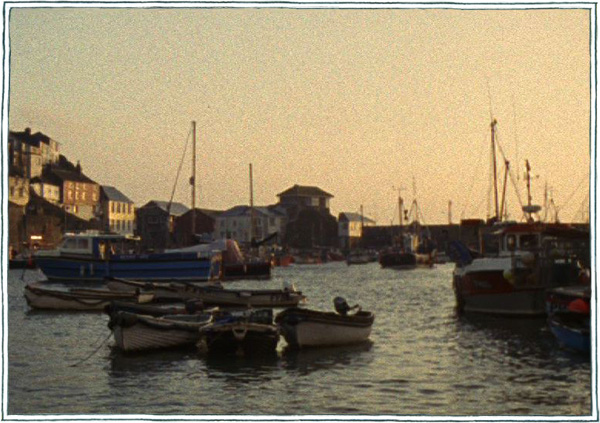
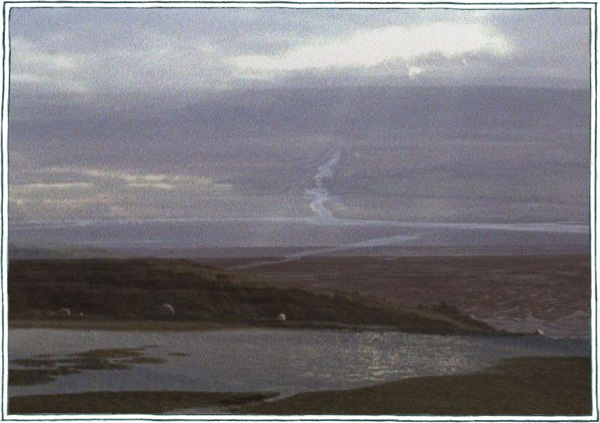
 Digital publication and traveling exhibit accompanying Gramarye, featuring the real places and legends in dialogue with Cooper's sequence. In progress.
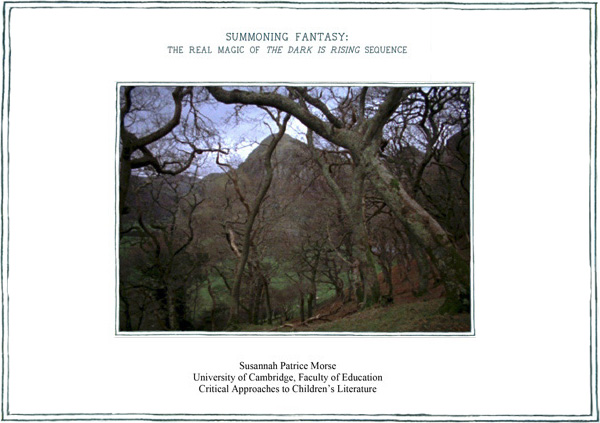
 Immanence, intimate time-space and the magic of creativity in radical post-war fantasy. University of Cambridge. Faculty of Education: Critical Approaches to Children's Literature M.Phil Thesis: Distinction. 2014.
ABSTRACT: Published between the fantastically innovative years of 1965 and 1977, Susan Cooper’s The Dark Is Rising sequence balances on the threshold of radical change, poised between the conservative constructions of its genre and the subversive undercurrents of a real and changing world. Like many English fantasies of the era, the sequence is rooted in the real places of Britain, depicting their actual natural landscapes, cultural histories, and legendary and mythic intersections in vivid, atmospheric detail. However, in a subtle but radical shift from the traditional Romantic constructions of nature, locality and mystic spectrality, Cooper challenges the underlying structures of fantasy, summoning her magic from the real and immanent material world rather than presenting it as an external or oppositional force. Though similar trends towards ‘real magic’ can be found across post-war children’s fantasy, the sequence is unique in the prevalence and power of its fantastic summonings. As a classic of the genre, it also embodies the influential potential of children’s literature to inspire cultural and artistic change. Through its awakening of the landscape to fantastic immanence, The Dark Is Rising sequence presents new forms of empathic connection to natural energies; in its intimate, corporeal engagements with a shifting fantastic timespace, it offers a subjective and relational approach to culture, history and locality through its child protagonists; in its intertextual allusions and awakening of fantastic intuition, it points young readers to the real and subversive powers of creative and intellectual engagement, enhancing their awareness of the intrinsic connections between mind, body and material world. By exploring the radical potential of Cooper’s text, I hope to illuminate its inherent structural and thematic tensions, as well as encourage a new mode of critical engagement with post-war children’s fantasy.

Literary analysis of Very Last First Time by Jan Andrews and Ian Wallace, supported by empirical research. University of Cambridge, Critical Approaches to Children's Literature. M.Phil: Distinction. 2014.

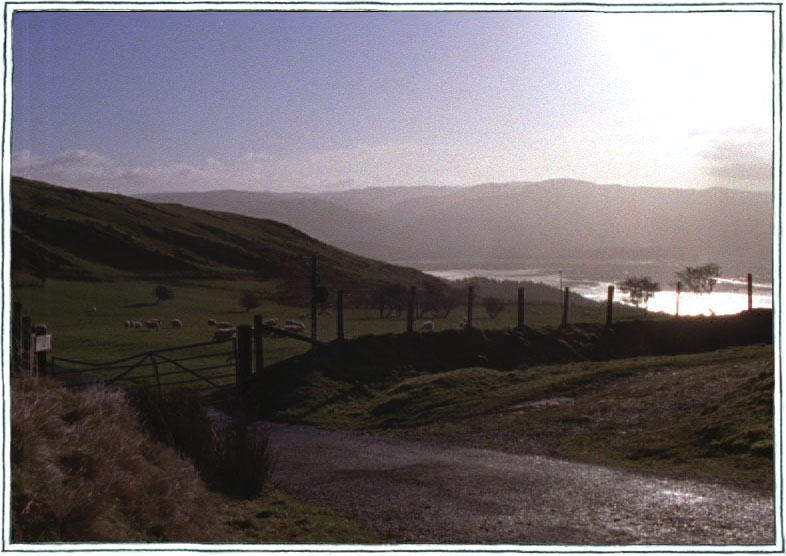
Production still from Gramarye.
Presented for the Green Man / Wild Man in Children's Culture conference at Trinity College Dublin with film images from Gramarye, July 20, 2012.
